
Bitcoin is Too Expensive, So I Will Buy Another Coin
Just found a solution. There's a new cheap crypto. Its called Satoshi and it's pegged to Bitcoin. 1 Satoshi = 0.00026 USD only (today 1 bitcoin = $26,000).
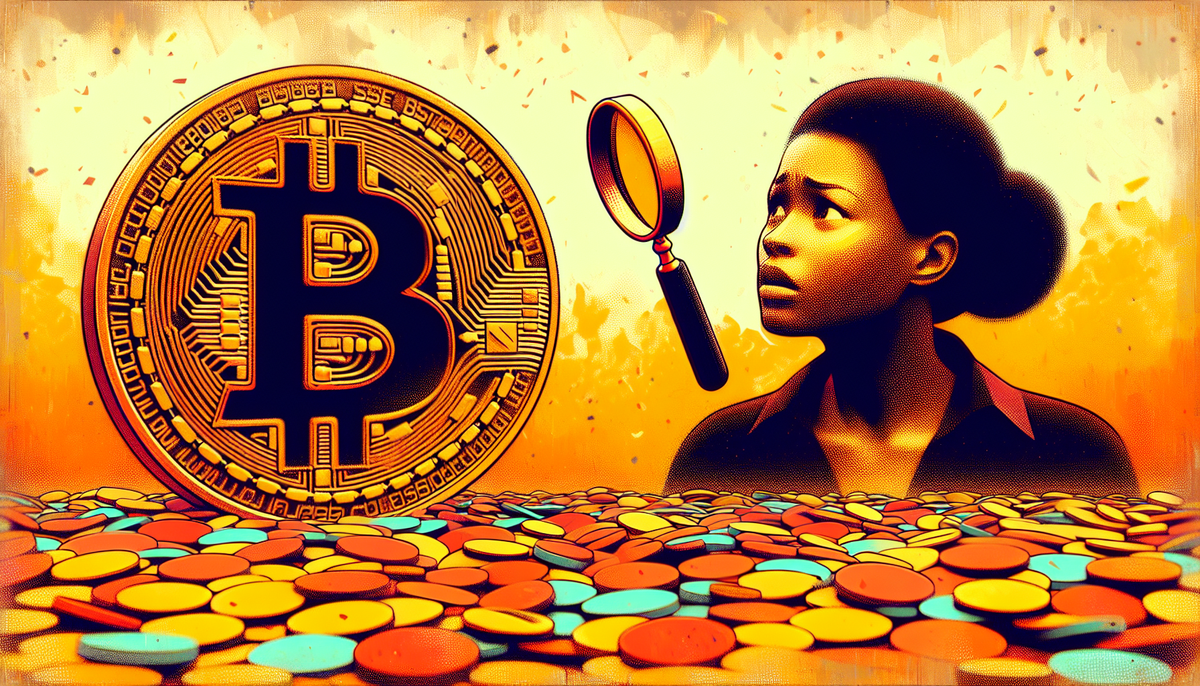
When Bitcoin crossed $100,000, the objection shifted from "it's a scam" to "it's too expensive." People look at the per-unit price and conclude they missed the opportunity. They then search for cheaper alternatives, coins priced at cents or fractions of a cent.
This reasoning contains a fundamental misunderstanding of how assets work.
The Unit Bias Trap
Per-unit price means nothing. What matters is market capitalization, network effects, and fundamentals.
Unit bias is the psychological tendency to judge value by the number of units you can buy rather than the actual value of what you're buying. A $100,000 Bitcoin feels expensive because you get a small decimal. A $0.50 altcoin feels cheap because you get 200 of them.
But "expensive" and "cheap" are meaningless without context. What matters is:
- Total supply: How many units exist or will exist?
- Market cap: What is the total value of all units?
- Network effects: How many people use it, trust it, build on it?
- Security: How resistant is it to attack or failure?
A coin with a per-unit price of $0.001 but a supply of 500 billion units has a market cap of $500 million. Bitcoin, with its $100,000 price and 21 million supply cap, has a market cap in the trillions. The "cheap" coin isn't cheaper. It's smaller, less proven, and often more diluted.
Bitcoin Is Infinitely Divisible (Practically)
You don't need to buy a whole Bitcoin. You can buy any amount, down to the smallest unit: a satoshi.
One Bitcoin equals 100,000,000 satoshis. At $100,000 per Bitcoin, one satoshi costs $0.001. You can buy $10, $50, or any amount of Bitcoin. The system doesn't require whole units.
This divisibility is built into the protocol. Unlike traditional assets where fractional ownership requires special arrangements, Bitcoin is natively divisible to eight decimal places. In practice, this means infinite flexibility in allocation size.
Why "Cheaper" Coins Aren't Cheaper
Altcoins with low per-unit prices often achieve that price through massive supply inflation. The real question isn't "what does one unit cost?" It's "what am I actually buying?"
| Attribute | Bitcoin | Typical Altcoin |
|---|---|---|
| Supply Cap | 21 million (fixed) | Often billions, sometimes unlimited |
| Security Model | Proof of work, 15+ years proven | Varies, often untested at scale |
| Network Effects | Global recognition, institutional adoption | Niche communities, speculative interest |
| Track Record | Survived multiple 80%+ crashes | Many have gone to zero |
| Divisibility | 8 decimal places (100M satoshis) | Varies, often less granular |
A coin priced at $0.10 with 50 billion supply has the same market cap as Bitcoin if Bitcoin were priced at $500,000. The low per-unit price doesn't make it more accessible. It makes the supply more diluted.
What You're Actually Paying For
The value of any asset comes from what it does and how reliably it does it. Bitcoin offers:
- Fixed supply: No central authority can inflate it.
- Decentralization: No single point of failure or control.
- Security: The most computational power securing any blockchain.
- Liquidity: Deep markets on every continent.
- Adoption: Recognized by governments, institutions, and millions of individuals.
Altcoins offer... potential. Some have interesting technology. Some have enthusiastic communities. But most lack the network effects, security, and battle-testing that make Bitcoin what it is.
Buying a "cheaper" coin because you can own more units is like preferring a thousand pennies over a single hundred-dollar bill.
The Real Barrier Isn't Price
The actual barrier to Bitcoin ownership isn't the per-unit price. It's understanding what you're buying and why it matters. People who think Bitcoin is expensive haven't yet understood:
- It's divisible to any practical amount.
- The per-unit price is irrelevant compared to the value proposition.
- Network effects and security matter far more than low entry prices.
You don't need a whole Bitcoin any more than you need a whole bar of gold. You buy what you can afford, based on conviction in the asset's long-term value.
If Bitcoin seems expensive, buy satoshis. If altcoins seem cheap, ask what you're actually getting for that low price. The answer is usually: higher risk, weaker fundamentals, and a psychological trick disguised as a bargain.
This is for education only and shares personal opinions. It is not investment, legal, accounting, or tax advice. Investing carries risk, including loss of principal. Do your own research and consult professionals. Examples, ranges, and policies are illustrative and may not suit your situation. The author may hold positions in the assets discussed.


Comments ()